

Private credit has grown into one of the most dynamic areas of finance in Australia, offering investors attractive yields and diversification beyond traditional equities and bonds. It is no longer a niche strategy confined to institutional investors. Superannuation funds (including SMSFs), wholesale investors and even retail investors are increasingly gaining exposure, either directly or indirectly. The domestic market is now estimated to exceed $200 billion, with real estate finance estimated to account for roughly half of all activity.
Done well, private credit plays a vital role in supporting economic growth. It fills funding gaps left by the mainstream traditional banks, especially in property development and mid-market corporate lending. However, as ASIC’s recent report makes clear, investors need to approach this asset class with caution and their eyes wide open. The very features that make private credit attractive, higher yields, access to non-bank lending, interesting deals and exposure to unique assets also create very real risks that are not always understood or indeed visible in glossy marketing materials.
This article explores some of the key areas investors should scrutinise before allocating capital to private credit, drawing on ASIC’s findings and recent examples from the Australian market.
Conflicts of Interest
One of the clearest themes in ASIC’s report is the prevalence of conflicts of interest in the sector. These conflicts often arise from how managers are remunerated. Unlike listed bonds or bank loans, where interest margins are transparent, private credit managers sometimes retain 50–100% of borrower fees, including upfront, origination, restructuring and even default-related fees.
In practice, this means that managers may have incentives that do not fully align with investors.
For example, if a manager profits more from arranging frequent short-term loans than from maximising long-term interest income, its behaviour may tilt towards churn rather than stability. Similarly, some managers use special purpose vehicles (SPVs) to lend at higher rates than the fund reports to investors, pocketing the difference. Investors may think they are receiving the full risk-adjusted return, but in reality, part of the margin is being captured by the manager.
The issue extends to related-party transactions. Managers can lend to property developers with whom they have other business ties, or transfer loans between funds under their control, without properly independent valuations.
These practices may not outright breach the law, but they raise questions about whether managers are always acting in the best interest of their investors.

Fees and Transparency
Headline management fees are often not the whole story. While some managers pass on all borrower fees back to the fund, some funds may retain some or all of them. Because fees paid by the borrower are often excluded from disclosure, the “true cost” of investing can be significantly higher than what is published.
For investors, this makes comparing funds very difficult. A fund that appears to have low fees may in fact be extracting significant additional compensation from borrowers. ASIC’s report notes that best practice—already common among global players, is for all borrower fees to be disclosed and, ideally, distributed in full back to investors.
Without full transparency, investors risk overestimating net returns. In some cases, distributions advertised as “yield” may include capital repayments rather than cash income generated by the loan book.
For example, some property development funds marketed consistent monthly distributions of 0.8–1% even though the underlying loans produced no cash interest during construction. Instead, the distributions were paid from investor capital or new contributions, a practice that can mask the true economic performance of the loan or the fund.
Valuations and Reporting
Private credit depends heavily on valuations of illiquid loans, yet ASIC found wide inconsistencies in how managers handle them. Many funds do not conduct quarterly valuations and some rely entirely on internal staff performed valuations without any independent oversight or validation.
This is particularly problematic in real estate development finance, where quoting loan-to-valuation ratios (LVRs) based on forecast completion values, rather than acquisition cost or current value, can understate or distort risk.
Investors should question whether valuations are performed by properly qualified independent third parties, how frequently they are updated and for whom they are prepared. A valuation prepared for a borrower seeking to maximise loan proceeds is very different from one intended to protect lenders. ASIC highlighted cases where valuations were inflated by using gross rental assumptions rather than net effective rents.
Best practice is clear, namely independent quarterly valuations carried out by appropriately qualified and experienced valuers, transparent methodologies and disclosure of valuation policies. Investors should also expect reporting on portfolio concentrations, impaired loans and the proportion of loans using non-cash features like “payment-in-kind” (PIK) interest.
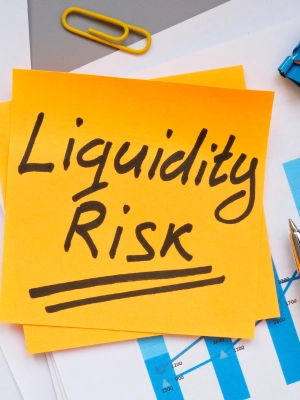
Liquidity and Redemption Risk
One of the structural challenges in private credit is liquidity. The loans are often multi-year and illiquid, yet many funds market themselves as offering regular redemptions. ASIC noted that liquidity in unlisted funds often depends on new investor inflows or the refinancing of existing loans.
This model works in a rising market, but the Australian private credit sector has yet to experience a severe downturn. In a stress scenario, redemptions are likely to be frozen or delayed. By way of analogy, this has proved to be relatively common in the REIT sector where even the larger Reits are not immune from the need to suspend or freeze redemptions from time to time, or for a long time.
Investors should therefore be realistic about liquidity and proceed on the basis that it may not be available when needed. Closed-end funds with multi-year lockups may offer higher yields precisely because they do not promise early exit. Open-end or listed structures provide more flexibility, but may involve compromises in portfolio quality or return.
Real Estate Concentration
Perhaps the single biggest risk in Australia’s private credit market is its heavy exposure to real estate construction and development finance. This sector has historically produced the bulk of credit losses during downturns, both domestically and overseas.
Unlike income-producing real estate, construction loans generally have no cash flow until a project is complete and then sold off. Interest is either capitalised or paid out of loan drawdowns, which means distributions to investors may not reflect genuine earnings.
The report warns that many funds targeting self-managed superannuation funds and retail investors are concentrated in this space. These funds often advertise steady returns that appear inconsistent with the underlying risk. ASIC cautions that in an economic downturn, losses could be significant, particularly given the sub-investment grade nature of much of this lending.
Investors need to understand whether they are effectively funding negative cash-flow projects and whether returns rely on the timely sale or refinancing of completed developments.
Governance and Manager Quality
Finally, investors should pay attention to governance. Larger, institutional-grade managers, particularly those with global backing, tend to have independent boards, valuation committees and experienced staff with workout expertise.
Smaller or newer entrants may lack the resources or experience to conduct rigorous due diligence, or manage troubled loans.
ASIC has also raised concerns about practices such as “amend, extend and pretend,” where troubled loans are restructured to avoid recognising losses, or managers topping up distributions to hit a monthly yield.
These tactics may preserve appearances in the short term but may also mask real risks or underlying problems.
Private credit in Australia offers genuine opportunities for yield and diversification, but investors cannot afford to take headline numbers at face value. Fees, valuations, liquidity and governance practices vary widely across the market. The greatest risks lie in opaque fee structures, inconsistent valuations, over-promised liquidity and the concentration of capital in higher-risk property construction and development loans.
The lesson for investors is clear: due diligence is essential. Ask how managers are compensated, who performs valuations, what is the true source of distributions and how liquidity will be handled in a downturn. Scrutinise whether the risks are being adequately disclosed and whether the returns justify them.
As ASIC has highlighted, the Australian private credit market is still maturing. While the institutional end of the spectrum demonstrates sound governance, retail-facing funds in particular often fall short of international best practice. For investors, this means that vigilance, scepticism and a willingness to probe beneath the surface are vital.
Done with care, private credit can indeed play a valuable role in a diversified portfolio. But without careful scrutiny and understanding, investors risk stepping into strategies where the manager’s interests may be better protected than their own.
PrimaryMarkets
For companies and managed funds that are not listed on a stock exchange, the PrimaryMarkets trading Platform is an ideal way to facilitate the off-market sale of shares in your company and units in managed funds.
PrimaryMarkets is a flexible and evolving Platform that responds in real time to an ever-changing investment environment. In doing so, it provides sophisticated investors with access to companies that are shaping the future in a wide variety of industries and sectors. We provide access to opportunities previously only accessible to institutional investors. In addition to trading, PrimaryMarkets helps companies raise capital from our global investor database.
PrimaryMarkets exemplifies how innovation can transform the way we invest, trade and raise capital by breaking down traditional barriers, providing liquidity solutions and promoting transparency.
As the Platform continues to grow and evolve, it promises to unlock even more opportunities for investors and companies shaping the future of economies.