

For decades, one of the defining characteristics of private markets has been illiquidity. Investors commit capital with the expectation that they may need to hold their investment for many years before a liquidity event occurs, whether through an IPO, acquisition or company buyback.
While this long-term investment horizon has helped many businesses grow, today’s private market is evolving. Companies are staying private for longer, venture capital funding cycles are extending, and shareholders increasingly want greater flexibility over when and how they realise value.
As a result, liquidity has become one of the most important considerations in private investing.
At PrimaryMarkets, we believe that improving liquidity benefits everyone involved companies, existing shareholders and new investors.
What Is Liquidity?
Liquidity refers to how easily an asset can be bought or sold without significantly affecting its price.
Publicly listed shares are generally highly liquid because they trade every day on stock exchanges with thousands of buyers and sellers.
Private company shares are different.
Transactions typically involve:
- Finding interested buyers
- Negotiating terms
- Completing legal documentation
- Receiving company approvals where required
- Completing settlement
This process can often take weeks or even months, making liquidity considerably lower than in public markets.
However, lower liquidity does not have to mean no liquidity.

Why Liquidity Is Becoming More Important
The private capital market has grown dramatically over the past decade.
Many successful businesses now remain private well beyond the stage at which previous generations would have listed on a public exchange.
This creates a new challenge.
Early investors, founders and employees often accumulate significant value in their shareholdings, yet may have limited opportunities to access that value without waiting for an uncertain future exit.
At the same time, sophisticated investors increasingly want access to quality private businesses without participating solely in primary capital raisings.
These trends are driving demand for more active secondary markets.
Benefits of Liquidity for Investors
Portfolio Flexibility
Liquidity gives investors greater control over their portfolios.
Rather than being locked into an investment indefinitely, shareholders may be able to:
- Rebalance portfolios
- Realise gains
- Reduce exposure
- Diversify into new opportunities
- Manage tax planning strategies
Greater flexibility encourages broader participation in private markets.
Better Price Discovery
Regular trading activity provides valuable pricing information.
Instead of relying solely on periodic funding rounds or independent valuations, active secondary trading helps establish market-based pricing through real buyer and seller interaction.
Improved price discovery benefits:
- Existing shareholders
- Prospective investors
- Company management
- Boards of directors
Transparent pricing also increases confidence across the market.

Access to High-Quality Companies
Secondary markets allow investors to purchase shares in established private companies that may no longer be raising new capital.
This expands investment opportunities beyond traditional fundraising rounds and enables investors to participate in businesses that might otherwise be inaccessible.
Benefits for Private Companies
Liquidity is not only valuable for investors.
Companies themselves can benefit significantly from having an organised secondary market.
Supporting Existing Shareholders
Founders, early investors and employees often hold substantial equity positions.
Providing an orderly pathway for partial liquidity can help reward long-term supporters without requiring the company to undertake an IPO or acquisition.
Improving Employee Retention
Many high-growth companies use employee share ownership plans (ESOPs) to attract talented staff.
However, employee equity becomes significantly more valuable when participants believe they may eventually have opportunities to realise some of that value.
A structured secondary market can strengthen employee engagement and retention.
Expanding the Shareholder Base
Active secondary trading introduces new sophisticated investors to the company.
This broader shareholder base can improve market awareness while creating additional demand for future capital raisings.
Remaining Private for Longer
Increasingly, successful businesses are choosing to remain private.
Access to ongoing secondary liquidity allows companies to enjoy many benefits traditionally associated with public markets without the cost, complexity and regulatory burden of a stock exchange listing.
The Rise of Secondary Markets
Globally, secondary private market transactions have grown rapidly.
Institutional investors, family offices and sophisticated investors increasingly view secondary trading as an essential component of private capital markets.
Rather than waiting for a single exit event years into the future, investors can now access more flexible opportunities to buy and sell private company shares.
This trend reflects the broader maturation of private markets around the world.
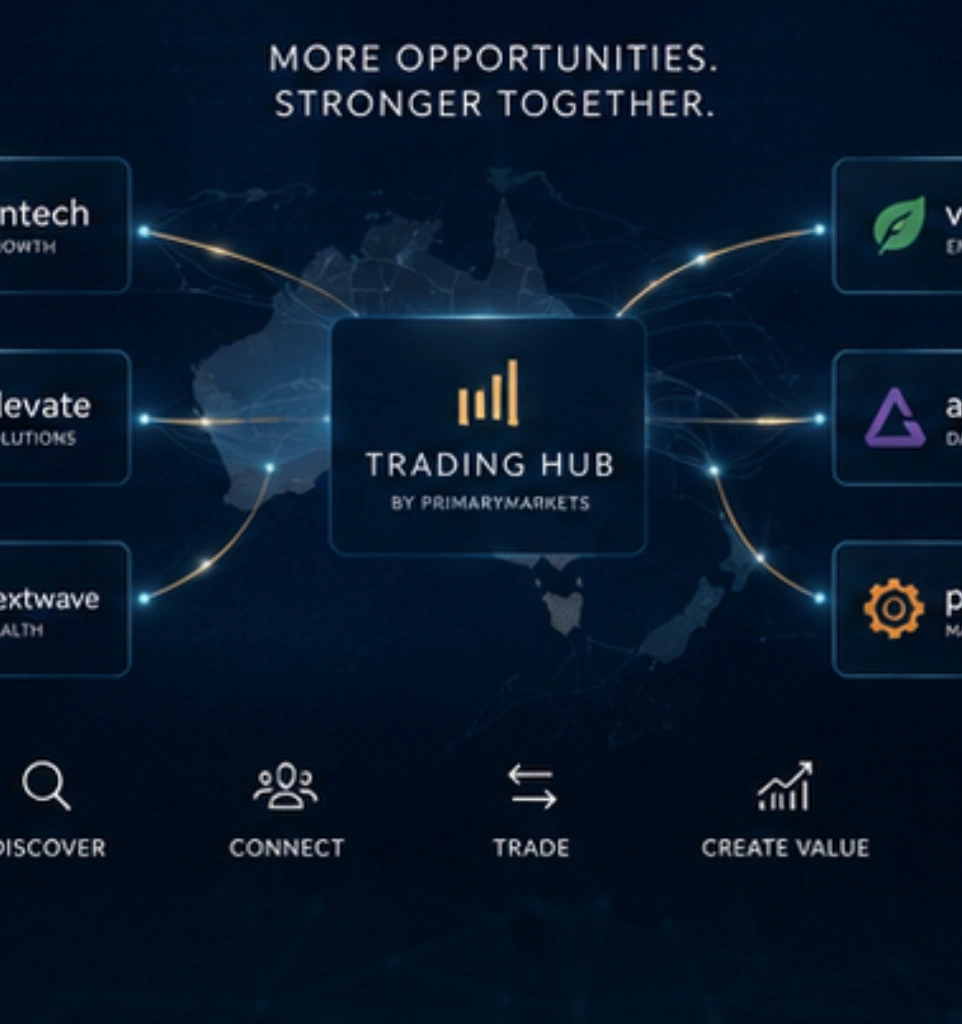
How Trading Hubs Improve Liquidity
PrimaryMarkets has developed Trading Hubs to help facilitate organised secondary trading for private companies.
A Trading Hub provides a dedicated marketplace where eligible shareholders and approved investors can participate in structured trading opportunities.
Rather than relying on informal buyer networks, companies gain access to a more organised framework for secondary liquidity.
Trading Hubs can help deliver:
- Centralised buyer and seller engagement
- Improved visibility of available opportunities
- More transparent pricing
- Efficient transaction processes
- Ongoing liquidity opportunities
- Greater shareholder engagement
While liquidity can never be guaranteed, creating an organised marketplace significantly improves the opportunity for buyers and sellers to connect.
Why Liquidity Is Becoming a Competitive Advantage
Private companies increasingly compete for:
- Investors
- Employees
- Strategic partners
- Growth capital
Businesses that can demonstrate a clear pathway for shareholder liquidity may become more attractive than those offering only long-term, uncertain exit options.
Likewise, investors increasingly consider potential liquidity when evaluating private investment opportunities.
Companies that embrace organised secondary trading are positioning themselves for a changing private capital landscape.
The Future of Private Markets
Private markets are becoming larger, more sophisticated and increasingly global.
As this evolution continues, liquidity is likely to become one of the defining characteristics separating mature private market ecosystems from traditional buy-and-hold investing.
Secondary trading does not replace long-term investing—it complements it by providing greater flexibility, improved transparency and more efficient capital allocation.
The result is a healthier ecosystem that benefits companies, shareholders and new investors alike.
Conclusion
Liquidity has traditionally been one of the greatest challenges facing private market investors.
Today, that is changing.
Structured secondary markets are creating new opportunities for shareholders to access liquidity while helping companies remain private and continue growing.
PrimaryMarkets’ Trading Hubs are designed to support this evolution by providing an organised environment where buyers and sellers can connect more efficiently, helping unlock value for all participants in Australia’s growing private capital market.
If your company is exploring ways to provide greater shareholder liquidity while remaining private, learn how PrimaryMarkets Trading Hubs can help create a more active secondary market for your shares.
Contact the PrimaryMarkets team today to discuss how a Trading Hub could support your company’s long-term growth strategy.